
Copper Fails in the Second Summer, Not the First Week
Ethernet installations rarely fail on the day they are tested. They fail eighteen months later, in August, when a floor of access points starts dropping and nobody can explain why the same cable certified clean in March. In Georgia the reasons are usually environmental, and almost all of them were locked in during installation.
Bundle heat and PoE
Power over Ethernet turns every cable into a small heater. Bundle a hundred of them tight above a hard ceiling in unconditioned space and the conductors in the middle of that bundle run measurably hotter than the room around them. That is why we cap bundle sizes, keep separation in tray, and default to Category 6A on anything carrying the higher PoE classes. The larger conductors shed heat better and lose less of the power on the way to the device.
Ambient temperature shortens the run
Copper insertion loss rises with temperature, and cabling standards require you to shorten the permitted length as ambient climbs above room temperature. In a conditioned Atlanta office that is a footnote. Thirty feet above the slab in a Savannah distribution building in August it is a real subtraction, and it is exactly how a link that passed in the spring fails in midsummer. We plan warehouse and plant-floor horizontal runs against the temperature the space actually reaches, not against the number printed on the box.
Moisture, and cable that leaves the building
Georgia humidity finds loading dock ceilings, mezzanines, canopies and any pathway open to outside air. Interior-rated cable in those places takes on water and corrodes terminations from the inside. Damp locations get wet-location-listed cable. Anything that genuinely leaves one building for another gets outside-plant cable, a listed entrance protector and bonding to the building ground, not riser cable through a hole in a wall.
Choosing a Category Without Overbuying
- Category 6 is still sensible for short desk and phone runs in an office fit-out where nothing on the port draws real power.
- Category 6A is the default for wireless access points, cameras, higher-class PoE devices, and anything you would rather not open a ceiling for again in five years.
- Shielded construction earns its extra labor near variable frequency drives, welders and large motors, which means manufacturing on the I-75 corridor through Macon and Columbus. In an office it is money spent on nothing.
- Category 7 is not a recognized North American installation category. If a bid quotes it, ask what is actually being installed and what it will be tested to.
How the Work Runs
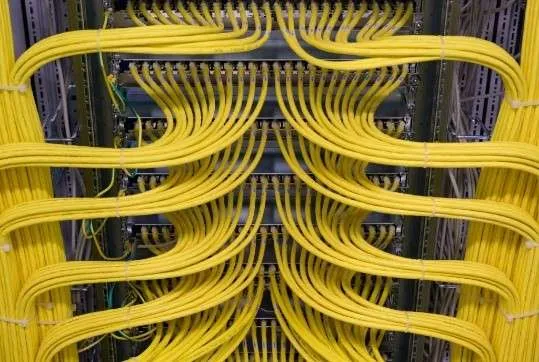
Pathway before cable. J-hooks and tray sized for the final count plus growth, supported from structure rather than from ceiling grid wire, sprinkler pipe or duct hangers. Rated walls and floors get sleeves and a tested firestop system matched to the penetrant, installed as a system instead of a caulk gun and optimism. Cable gets pulled below its rated tension, never bent tighter than its listed radius, and dressed so a technician can work the bundle in three years without cutting anything loose.
Certification Is the Deliverable
Every permanent link is tested with a certifier against the performance requirements for the category installed, and you get the results file, not a verbal assurance that it passed. With it comes an as-built showing outlet locations and identifiers, a labeled patch field, and a labeling scheme that follows standard administration practice so the next technician can trace a run from the label alone. Where a link cannot be done in copper at all, we say so during design and move it to fiber rather than stretching a channel and hoping.
Where We Do This in Georgia
Corporate campuses and tenant fit-outs across metro Atlanta. Distribution and fulfillment space along I-16 and I-95 behind the Port of Savannah. Manufacturing through Macon and Columbus. Medical, campus and student housing buildings in Augusta and Athens. Reach the Atlanta office at (888) 360-0035, or 2700 Cumberland Pkwy SE, Suite 410, Atlanta GA 30339, and ask for a site walk before you ask for a number.