
Cradlepoint Wireless WAN: When Cellular Is the Right Answer in Georgia
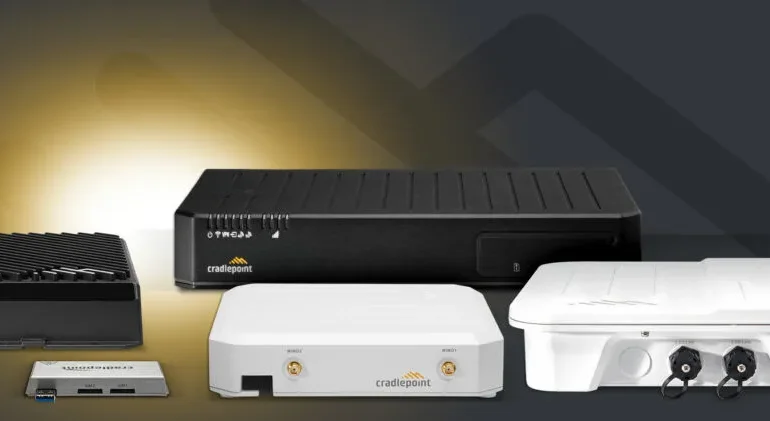
Cradlepoint, part of Ericsson, builds 5G and LTE routers for fixed sites, vehicles and IoT endpoints, managed through the NetCloud platform. KSEDCO deploys Cradlepoint equipment across Georgia. The useful conversation is not about the hardware; it is about whether wireless WAN is the correct tool for the site in front of you.
Good Fit
- A site that needs to be online before a carrier can trench. Wired circuit lead times routinely run months. A construction trailer, a new distribution building along I-16, or a leased suite that opens next month cannot wait.
- Failover for a location that cannot go dark. Georgia’s summer thunderstorm season takes down utility power and carrier circuits regularly, and the coastal plain adds hurricane exposure. A cellular path on a separate infrastructure keeps payment processing and dispatch alive when the wire is cut.
- Temporary sites. Production units working around metro Atlanta, seasonal operations, and pop-up locations all need a network that arrives and leaves with the crew.
- Vehicles and mobile equipment. Anything that moves has no other option.
- Low-data endpoints spread across a wide area. Sensors, gates, kiosks and metering, where running cable to each one costs more than the device.
Poor Fit
- A primary circuit for a site pushing large sustained volumes, where a wired connection is genuinely available at reasonable cost
- Anything where the data plan economics have not been checked against actual usage, which is how organizations end up with overage bills that dwarf the hardware
- A site with no viable antenna location, which is more common in dense industrial buildings than people expect
Coverage Is a Site Question, Not a Map Question
Carrier coverage maps describe outdoor conditions at street level. They tell you very little about signal inside a metal building in south Georgia or in the middle of a warehouse floor behind the port. We put an actual router at the intended location and log signal quality over several days, across the carriers under consideration, before committing to a design. A location that reads as strong coverage on a map and marginal in the building is a common and expensive surprise.
Cradlepoint’s support for multiple carriers matters here. Where one carrier is weak at a specific address another is often strong, and a dual-SIM configuration removes the need to be right the first time.
Antennas, Mounting and the Weather
The router almost never belongs where the antenna needs to be. Getting the antenna to the roof or to an exterior wall means cable loss, so we keep runs short and use the right cable rather than whatever is on the truck. Outdoor mounting in this state means UV exposure, driving rain and a real lightning risk, so exterior antennas are grounded and the coax entry is surge-protected. Indoor equipment in an un-conditioned space needs an enclosure rated for the temperature and moisture it will actually see, not the temperature in the office where it was configured.
Vehicles and Yard Equipment
In-vehicle routers face vibration, temperature extremes and a power source that dips hard on engine crank. Mounting, power conditioning and ignition-sensing configuration determine whether the unit survives, and antenna placement on the roof determines whether it performs. This applies as much to yard trucks and terminal equipment moving containers as to patrol vehicles and ambulances.
Managing It After Install
NetCloud provides remote configuration, monitoring and zero-touch provisioning, which is the practical reason to standardize on one platform across scattered sites. Data usage per device is visible there, and it is worth reviewing monthly rather than annually. Set alerting on signal degradation, not only on outright failure, because a link that has quietly dropped to a weaker band will fail you during the event you deployed it for.
To evaluate wireless WAN for a Georgia site, call KSEDCO at (888) 360-0035.