
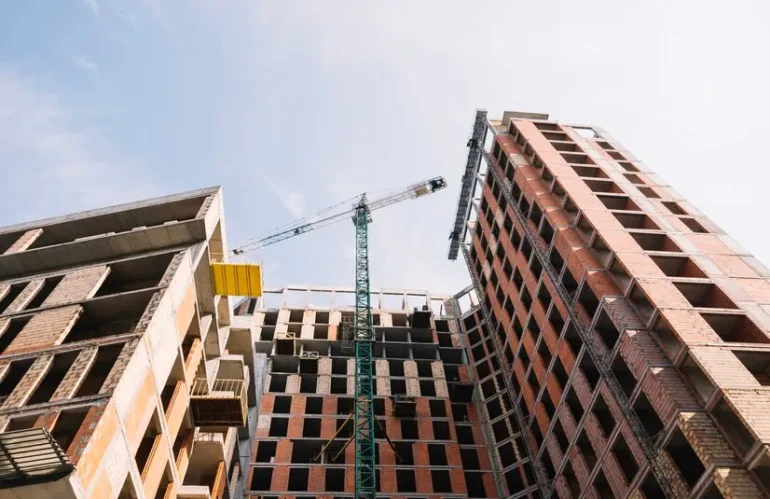
Low-Voltage Rough-In for New Construction in Georgia
On a new building, the low-voltage contractor’s real product is timing. The cable itself is not complicated. Being in the right place before the concrete cures, before the drywall closes and before the ceiling grid goes in is the entire job, and every decision below is tied to a milestone that does not come back around.
Design development: what has to be settled first
Telecommunications room locations fall out of the 100 meter copper limit worked against the real floor plate, so they get fixed before the core layout is final. Those rooms need dedicated circuits, cooling that runs with the door shut, a grounding path and enough clear wall for what mounts on it. Riser sleeves, exterior conduits and any underslab pathway have to appear on the drawings at this stage. If the owner wants the finished system registered under a manufacturer’s system warranty, the component list gets locked now, because those programs require matched components end to end.
Before the pour and before the deck
Underslab conduit for floor boxes and equipment islands, stub-ups at future workstation clusters, and conduit out to gates, cameras, signage and lot lighting all happen while the site is still open. Once the slab is poured and the lot is paved, each of those becomes a core drill, a trench or a compromise.
Rough-in: the window between framing and drywall
This is the shortest and busiest phase. Cable rides its own supported pathway, keeps its separation from power, and never hangs off another trade’s hangers. Boxes and mud rings go in alongside the electricians so device heights match across the wall. Sleeves through rated assemblies get their firestop systems as they are installed, not as a punch item. Open cable ends get capped and stored reels get covered, because a Georgia shell that is not yet dried in collects humidity and red clay dust, and neither one belongs inside a connector.
Trim, then the part people forget
Terminations, faceplates and rack build follow paint. Then comes closeout, which is the part the owner actually keeps: certification results for every permanent link delivered as a file, labeling that matches the drawings at both ends, as-built plans that show what was installed rather than what was drawn, rack elevations, and a port-to-outlet record. A building handed over without that documentation pays for it on every move, add and change for the rest of its life.
Project types across Georgia
Metro Atlanta corporate campuses and tenant fit-outs make up most of the volume, and how generously the base building was given pathway decides how painful the next tenant’s job will be. Distribution buildings along I-16 and I-95 behind the Port of Savannah are long, tall and largely unconditioned, which pushes network rooms outward and fiber into the backbone. The data center corridor west of Atlanta runs on its own schedules and inspection expectations. Purpose-built film and television production space around Atlanta places heavy power and connectivity demands in locations a conventional office layout would never put them. And on any Georgia site, summer storm season is a real schedule risk, worth carrying float for rather than explaining later.
Get the low-voltage scope onto the drawings
KSEDCO works with general contractors, electrical contractors, architects and owners on new construction throughout Georgia from our Atlanta office at 2700 Cumberland Pkwy SE, Suite 410. If the project is an industrial building, our manufacturing facility page covers the plant floor side. Call (888) 360-0035.