
Brivo in Georgia: the decisions that change the specification
Brivo is a cloud-managed access control platform. Administration happens in a browser, but the control panels and readers stay in the building and keep making door decisions whether or not the internet is up. Almost every real argument about a Brivo project comes down to four things: how many doors a panel has to carry, what the system does when the circuit drops, which credentials the building already has, and who holds the account afterward.
Video is now part of the same decision
Brivo and Eagle Eye Networks merged in December 2025 under the Brivo name, putting cloud access control and cloud video in one portfolio. That changes the scoping conversation before hardware is ordered: decide whether video belongs in the same cloud relationship as the doors, or stays with a separate recorder and video management system. The answer drives camera selection, upload bandwidth and retention, and it is expensive to reverse once cameras are on the wall. Confirm current subscription and hardware compatibility against Brivo’s own documentation for the release you are actually buying.
Door count sets the hardware, not the brochure
Brivo’s ACS control panel families differ mainly in how many doors a board supports. A twelve-door tenant fit-out in a Cumberland or Perimeter tower and a distribution building off I-16 behind the Port of Savannah with four exterior doors, two dock man-doors and a gate reader are different hardware counts even though both are “Brivo.” Every opening still needs a lock, request-to-exit, door position, life-safety release, enclosure power and battery capacity worked out one at a time.
What happens when the connection drops
Georgia gets frequent summer thunderstorm outages, and the coastal plain adds hurricane exposure on top of that. Panels hold their configuration locally and buffer events, so the real questions are operational: how long that buffer is expected to last, who is authorized to release doors manually in the meantime, and whether the panel enclosure and the network gear feeding it sit on the same protected power. Sizing a battery for the panel and forgetting the switch and the modem is the most common version of this mistake. Surge protection and grounding belong on the same drawing.
Credentials and identity
Brivo supports cards, fobs and mobile credentials through Brivo Mobile Pass. Mobile is an identity program rather than a reader feature: somebody has to own issuing and revoking, decide what happens to a contractor’s phone credential on the last day of a job, and keep a fallback for visitors and for people whose phones are not eligible. Buildings with high credential turnover feel this hardest, which in Georgia means student housing around Athens and the film and television production stages in metro Atlanta where crews rotate by project.
Inherited systems
Brivo is one of the older cloud access platforms, which is why a large share of the Brivo work here is takeover work rather than new installation. A building sells, a management company changes, and the new owner has doors that work, no login, no documentation and no idea which panel serves which opening. What gets established first is whether the account can be transferred, what firmware the panels are running, which readers and credential formats are in use, and which door is actually wired to which board, because the drawings are usually wrong or missing. That written record is yours regardless of who performs the work afterward.
The account belongs to the building
You should never be unable to administer your own doors because of who installed them. Administrator accounts, subscription ownership and a copy of the configuration should sit with the organization that occupies the building.
Related scope: access control systems and video surveillance. KSEDCO’s Georgia office is at 2700 Cumberland Pkwy SE, Suite 410, Atlanta GA 30339, (888) 360-0035.
Brivo resources for Georgia deployments and support
KSEDCO connects Brivo product selection with installation, software setup, maintenance and service. Review these guides when defining administrator ownership, mobile access, schedule logic, integration responsibilities and a realistic installed-system budget.
Discuss Brivo installation or service
Research guides are maintained by 360TechnologyGroup.com, the parent-company knowledge center. Product names belong to their respective owners.
Equipment we supply and install
Brivo is one of the oldest cloud access platforms, and across Georgia we meet it most often as an inherited system in a building that has changed hands.
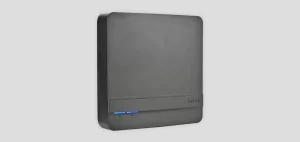
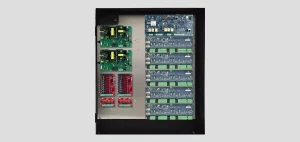
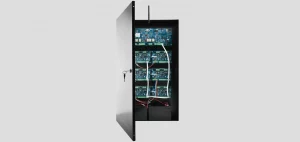
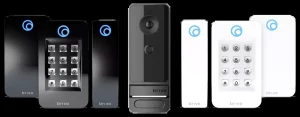

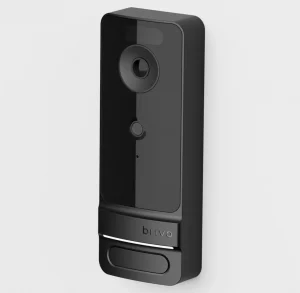

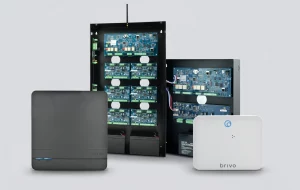
Product images are the manufacturer's, shown for planning. Final models and accessories are confirmed per project.
Brivo access control systems, and what "ACS" refers to
Brivo is a cloud access control platform — one of the oldest, which matters because a lot of buildings already have Brivo panels in them. The management software runs as a service; the control panels and readers stay on site and keep enforcing access if the internet drops.
You will see it written as Brivo ACS (Access Control System), and older estates may know it as Brivo OnAir. If a building changed hands and nobody can say what the door system is, a Brivo panel is one of the more likely answers.
Brivo control panels and readers
- Control panels sit in the comms room and do the actual decision-making — how many doors a panel supports is usually what decides the hardware count on a job.
- Readers and credentials — cards, fobs and mobile. Existing readers can often be reused, which is what makes a takeover far cheaper than a rip-out.
- Door hardware — strikes, maglocks and request-to-exit are the same physical problem as any other system, and are usually where the real cost sits.
- Video integration so a door event has a picture attached to it.
More detail on the platform and hardware on our Brivo cloud platform and control panels and readers pages.
Taking over an existing Brivo system
This is a large share of the Brivo work we do across Atlanta, Savannah, Augusta and Columbus. A building is bought or a management company changes, and the new owner has doors that work, no logins, no documentation and no idea who the previous integrator was.
What we establish first: whether the account can be transferred, what firmware the panels are on, which readers and credentials are in use, and which doors are actually wired to which panel — because the drawings, if any exist, are usually wrong. You get that written down whether or not you go on to use us for the work.
See also access control systems generally.
Brivo access control dealers — what the dealer actually does
Brivo is sold and installed through authorized dealers rather than off a shelf, so the dealer is part of what you are buying. That matters more with cloud access control than with most products, because the platform is only as good as the way it was set up.
What we do as a Brivo dealer across Georgia:
- Survey and design — which doors, what hardware each opening actually needs, and how many control panels that implies.
- Supply and installation — panels, readers, credentials, strikes and maglocks, request-to-exit, and the cabling behind all of it.
- Configuration — users, groups, schedules and door naming that a technician can follow later.
- Account ownership — the Brivo account is yours, not ours. You should never be unable to administer your own doors because of who installed them.
- Service afterwards — repairs, expansion, and takeover of Brivo systems installed by dealers who have since disappeared.
That last one is a large share of the Brivo work we do. A building changes hands, the new owner has working doors and no logins, and nobody knows which panel serves which opening. We establish that first and write it down.